
The "Squirrel!" Effect
Why We Get Distracted and How to Reclaim Your Focus
In our house, when someone yells “SQUIRREL!”, it’s the universal signal that we’ve drifted. Whether it’s a conversation, a chore, or a deep-work session, we’ve officially been hijacked.
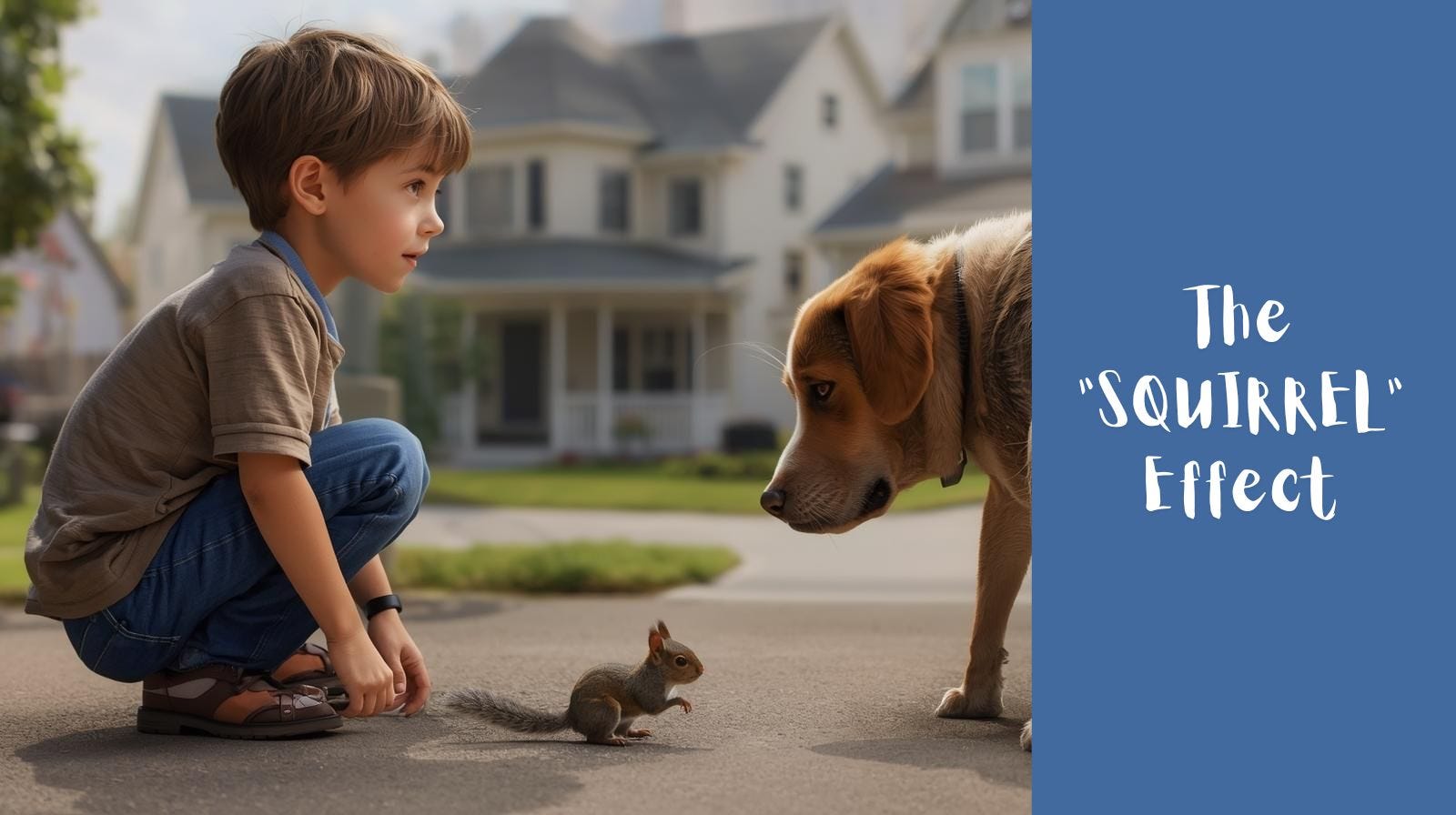
Why do we use that word? We have the movie Up to thank.
There is a famous scene where Dug the dog is mid-sentence, explaining (yes, the dog talks) something vital. He is focused, engaged, and intentional. Until—his ears perk. His eyes dart. His body stiffens. “SQUIRREL!” he shouts, snapping his head toward a tiny, irrelevant movement, leaving his audience completely baffled.
That scene is the perfect representation of the modern human brain. We laugh because we relate, but the “cost of switching” is higher than we think.
What is Distraction, Really?
Distraction is anything that diverts your attention from a primary task to a secondary stimulus. It interrupts flow and sabotages effective time management.
Most people think they have a motivation problem. They don’t. Distraction is actually a stimulus management problem. While some distractions are voluntary (choosing to scroll social media to avoid a hard task), most are involuntary and intrusive.
Three Types of Distraction
To defeat a “Squirrel,” you have to know what kind of squirrel you’re chasing. Most distractions fall into one of these three categories:
1. Mental Distractions (Thinking)
These are cognitive disruptions. When you feel “scattered,” your brain is likely chasing a new or unfinished thought. Your cognitive energy is being pulled toward anything novel, leaving your main task behind.
2. Emotional Distractions (Feeling)
When your emotions rise, your thinking ability decreases. If you are feeling anxious or irritated, that emotional state hijacks your bandwidth, making it nearly impossible to move forward on long-term goals.
3. Digital Distractions (Technology)
Digital distractions are the easiest to spot but the hardest to resist. These technology-driven interruptions fragment our attention and force the brain to constantly reorient, which research shows significantly increases cognitive load.
How to Minimize the “Squirrel” Moments
If you feel like distractions are running your life, you can train your brain to stay on track. It’s a muscle, not a fixed trait.
Perform a Personal Time Audit: For three days, track your “Squirrel” moments. When do they happen? What triggered them?
Audit Your Environment: Clutter and noise are physical distractions. If your space is disorganized, your brain will be, too. Create a space conducive to the work you want to do.
Commit to “The Power of One”: Pick one priority each day. Do whatever it takes to finish that one thing. If you get distracted, gently pull yourself back to that one task.
Pro-Tip: Every time you redirect your focus back to your priority, you are literally “re-wiring” your brain to be more resilient to future distractions.
Final Thought
If you are human, you are going to get distracted. The goal isn’t to become a robot; it’s to shorten the gap between the distraction and the recovery.
You might not defeat every “Squirrel” today, but you can certainly learn to stop chasing them.